Zhengzhou Success Machinery Co.,ltd - Professional valve manufacturer

News Center
One-stop Solution for Valve Products
News Events
Latest News

Valve selection steps and basis
Release time:
Jul 04,2024
Valve is a control element in the pipeline system, it is used to regulate the flow of media or pressure, its functions include cutting off or connecting the medium, control flow to change the flow, change the direction of the media flow, to prevent the medium from flowing back, control pressure or discharge pressure. The ultimate goal of using valves is to ensure the normal operation of the pipeline, improve pipeline safety and efficiency. Therefore, it is very important to use suitable and correct valves.
Valve is a control element in the pipeline system, it is used to regulate the flow of media or pressure, its functions include cutting off or connecting the medium, control flow to change the flow, change the direction of the media flow, to prevent the medium from flowing back, control pressure or discharge pressure. The ultimate goal of using valves is to ensure the normal operation of the pipeline, improve pipeline safety and efficiency. Therefore, it is very important to use suitable and correct valves.
Refer to the following steps on how to select a valve:
1、Define the use of the valve in the equipment or device, determine the working conditions of the valve: applicable media, operating pressure, operating temperature, etc.
2、Determine the nominal diameter of the pipeline connected to the valve and the connection method: flange, threaded, welded, etc.


3、Determine the way to operate the valve: manual, electric, electromagnetic, pneumatic or hydraulic, electrical linkage or electro-hydraulic linkage.
4、According to the pipeline medium, working pressure, working temperature to determine the selected valve shell and inner parts of the material。
5、Determine the geometric parameters of the selected valve: structural length, flange connection form and size, open and close the valve after the height direction of the size, the size and number of bolt holes to connect, the entire valve dimensions.
6、Selection of types of valves: closed-circuit valves, regulating valves, safety valves, etc.
7、Determine the type of valve: gate valves, globe valves, ball valves, butterfly valves, throttle valves, safety valves, pressure reducing valves, steam traps, etc.
In understanding and mastering the steps to select the valve at the same time, should further understand the basis for selecting the valve. Several commonly used valve selection basis.
1、Globe valve is suitable for the fluid resistance requirements are not strict on the pipeline, as well as high temperature, high pressure media pipeline or device, should not be used for viscosity and contain particles of the media, but also should not be used as a bleeder valve and low vacuum system valves.


2、Ball valves are suitable for low temperature, high pressure, high viscosity media, usually used in strict sealing performance, wear and tear, shrinkage channel, rapid opening and closing action, differential pressure, low noise, gasification phenomenon, small operating torque, low fluid resistance pipeline.


3、Throttle valve is suitable for medium temperature is low, high pressure occasions, not applicable to viscosity and contain solid particles of the media, should not be used as isolation valve.
4、Plug valves are suitable for the requirements of rapid opening and closing occasions, generally not for steam and higher temperature media, for lower temperature, viscosity of the media, but also for the media with suspended particles.


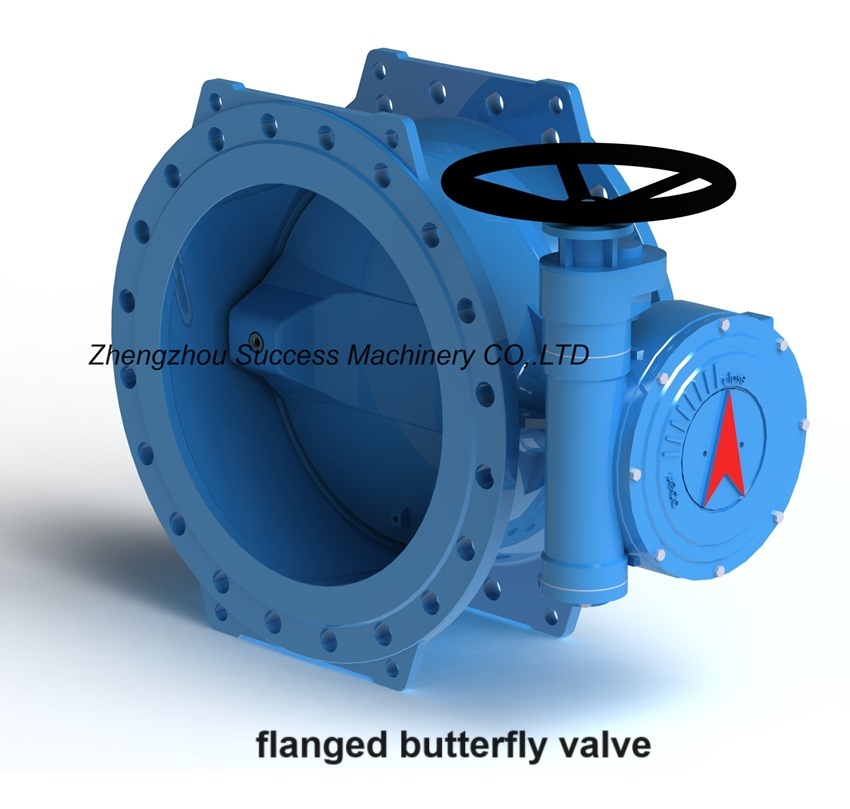
5、Butterfly valve is generally used for temperature ≤ 80 ℃, pressure ≤ 1.0MPa water, oil and compressed air and other media; due to the butterfly valve relative to the gate valve, ball valve pressure loss is relatively large, so the butterfly valve is suitable for pressure loss requirements are not stringent piping system.

6、Check valve is generally applicable to clean media, should not be used for solid particles and viscosity of the media.


7、Diaphragm valve is suitable for working temperature less than 200 ℃, pressure less than 1.0MPa oil, water, acidic media and media containing suspended solids, not for organic solvents and strong oxidant media.
keywords
:Next Page
Next Page:

Follow Us
Zhengzhou Success Machinery Co.,ltd
TEL:+8618595868771
E-mail:sales@successmach.com
Address:98-1 Dengfeng Road, Shangjie District, Zhengzhou City, Henan Province